





Skip to content

The Sonata® Procedure for Fibroids

Obstetrician and Gynecologist in the Inner Richmond neighborhood, San Francisco, CA

Serving patients in the Inner Richmond, San Francisco, and families throughout the San Francisco Bay Area.

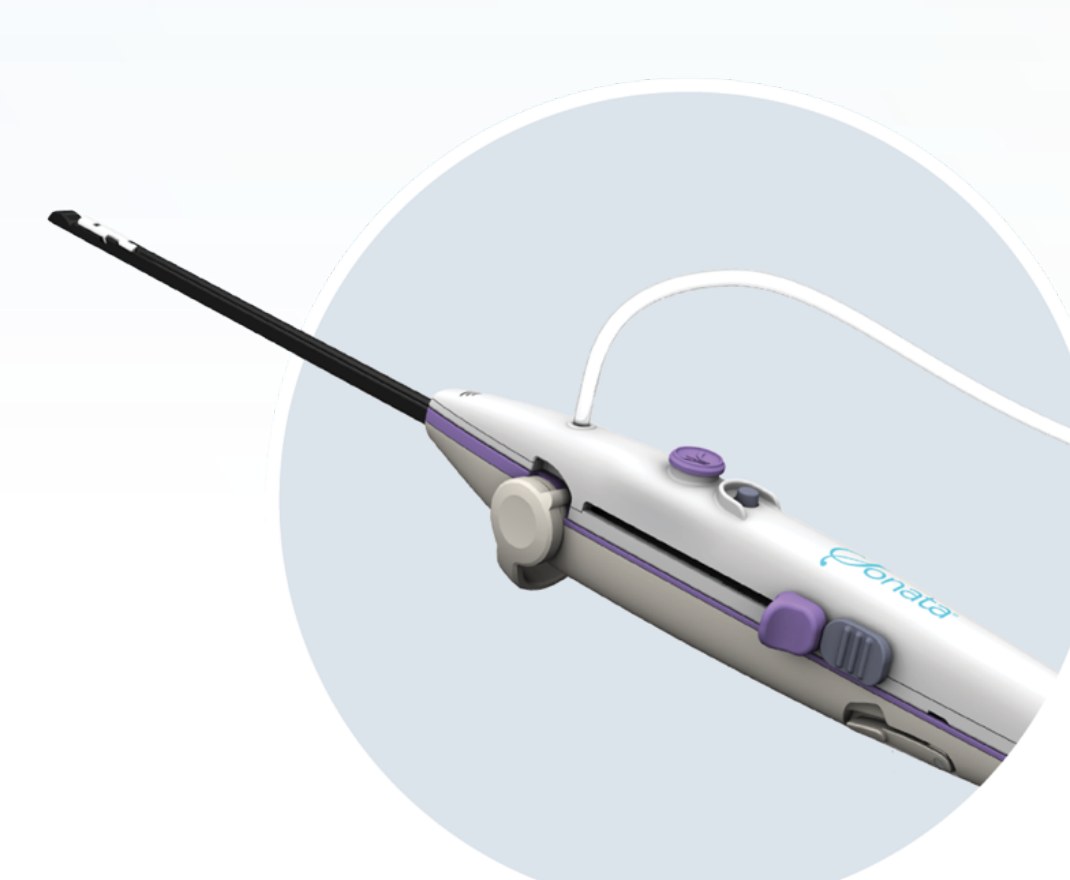
The Sonata device, a slim probe with a handle

Fibroid care

About the Sonata® procedure

The Sonata® procedure is an incisionless treatment option for women with symptomatic uterine fibroids. This less-invasive approach uses fibroid ablation to treat fibroids from inside the uterus, without abdominal cuts and without removing the uterus, so recovery time is typically minimal.

The Sonata procedure uses radiofrequency energy (heat) to ablate fibroids, causing proteins in the fibroids to break down. Treated fibroids will soften, changing in consistency from that of a baseball to a marshmallow and shrink in the following weeks and months, reducing fibroid symptoms.

Fibroid care

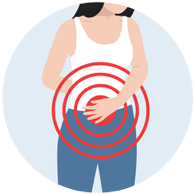
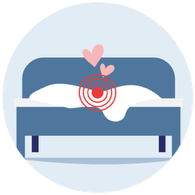
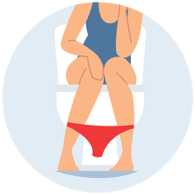
Common fibroid symptoms

  • Heavy menstrual bleeding
  • Abdominal bloating and cramping
  • Pelvic, back, and leg pain
  • Pain during sex
  • Frequent urination
  • Fatigue
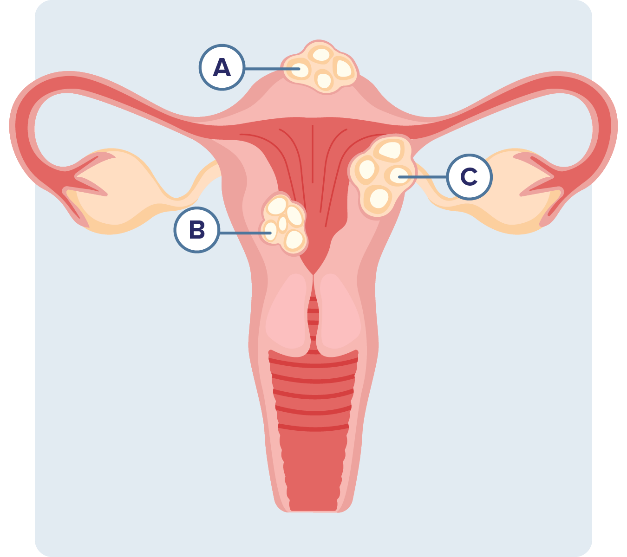
Diagram of the uterus with three fibroids marked A on the outer wall, B inside the uterine cavity and C within the uterus wall

Fibroid care

Treatable fibroids

Fibroids are noncancerous tumors that grow in or around the uterus and are classified by their location. The Sonata procedure treats fibroids from inside the uterus, including intramural, submucosal and some subserosal fibroids.

  • Subserosal fibroid:
    Fibroids located on the outer uterus wall
  • Submucosal fibroid:
    Fibroids located inside the uterine cavity
  • Intramural fibroid:
    Fibroids located within the uterus walls

Your physician will help determine which treatment is best depending on the size, location and symptoms of the fibroid.

Ask your doctor if Sonata may be right for you. Side effects may include bleeding, spotting, cramping and/or discharge. For Safety Information or to learn more, visit https://gynsurgicalsolutions.com/important-safety-information/.

The procedure

What to expect

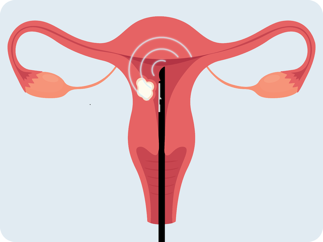
Before starting the procedure, your doctor will issue a pregnancy test to ensure you’re not pregnant. The procedure is performed under general anesthesia for patient comfort.

  1. Diagram of the ultrasound probe entering the uterus through the cervix

    Step 1

    Insertion

    The cervix is dilated and a slim ultrasound probe is gently inserted into the uterus to locate fibroids.

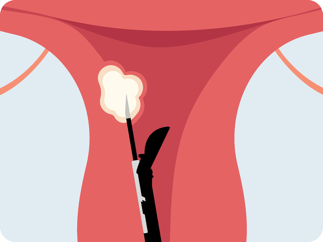
  2. Diagram of the device tip placed in the center of a fibroid

    Step 2

    Placement

    Once the fibroid is located, the tip of the device is inserted into the center of the fibroid.

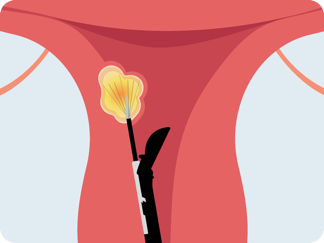
  3. Diagram of heat treating a fibroid inside the uterus

    Step 3

    Ablation

    Targeted heat is then used to ablate and treat the fibroid. This process may be repeated until each intrauterine fibroid is treated.

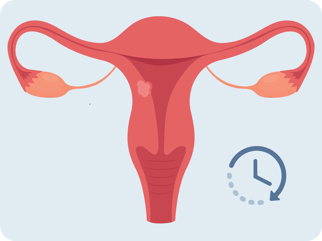
  4. Diagram of the uterus after the device is removed, with a clock showing healing over time

    Step 4

    End of Procedure

    The device is removed from the uterus, and over time, the treated fibroid tissue shrinks, softens and is naturally absorbed by the body.*

*Most patients reported significant relief within three months during the 12-month Sonata Clinical Trial

The Sonata procedure

Procedure overview

Benefits
No incisions or stitches, non-hormonal, and uterus-sparing
Duration
The procedure typically takes less than an hour, depending on the number and size of fibroids1
Recovery
Most women return to normal activities within 1-2 days2
Results
90% of patients reported a reduction in menstrual bleeding at 3 months3 and 95% at 12 months2
Satisfaction rate
97% of patients were satisfied with the Sonata procedure,2 and 97% said they would recommend it to a friend2

Questions

Frequently asked questions about the Sonata procedure

What can I expect after the Sonata procedure?

In terms of when you will see symptom relief, it depends on how big the fibroid is and what symptoms you were experiencing. Each fibroid is different, and each symptom is different, so the timeline truly varies from woman to woman.

  • In clinical studies, 50% of patients were able to return to normal activities the next day.2
  • You may experience cramping and mild pain, bleeding, discharge or spotting and in some cases post-ablation inflammation.
  • Most women see improvement in heavy menstrual bleeding within 3 months and continual improvement through 12 months.2
  • Any discomfort is generally managed with over-the-counter medications.

How will I feel after the Sonata procedure?

Any discomfort is generally managed with over-the-counter medications.

How long does the Sonata procedure take?

The procedure typically takes less than an hour, depending on the size and number of fibroids.4

What types of fibroids can the Sonata procedure treat?

The Sonata procedure can be used to treat almost all symptomatic uterine fibroid types, including subserosal, intramural, transmural, and certain submucosal. Sonata can be used to treat multiple fibroids in one procedure.

Your doctor will consider your fibroid type(s), size(s), location(s), and number to determine whether you may be a good candidate.

Are patients satisfied with the Sonata procedure?

Yes, Sonata is clinically proven to shrink fibroids and reduce menstrual bleeding without hormones. Women surveyed 12 months after their Sonata treatment reported the following results:2

  • 97% of patients were satisfied with the procedure
  • 97% said they would recommend the procedure to a friend
  • 95% of patients reported a reduction in menstrual bleeding

How does the Sonata procedure compare to other common fibroid treatment options?

Common treatment options include hysterectomy, laparoscopic myomectomy, and uterine artery embolization (UAE). See how the Sonata procedure compares to:

  • Hysterectomy – The Sonata procedure allows you to keep your uterus and has a quicker recovery time than a hysterectomy. However, hysterectomy is a definitive treatment, so after recovery, there is no chance fibroid symptoms will return.
  • Laparoscopic myomectomy – While laparoscopic myomectomy surgically removes fibroid tissues from the uterus, the Sonata procedure applies heat directly into the fibroid, causing it to shrink over time.
  • UAE – UAE is an outpatient procedure that restricts blood flow to fibroids which causes the fibroids to shrink.

Safety information

Sources

Ask your doctor if Sonata may be right for you. Side effects may include bleeding, spotting, cramping and/or discharge. For Safety Information or to learn more, visit https://gynsurgicalsolutions.com/important-safety-information/.

  1. Bradley LD, Pasic RP, Miller LE. Clinical Performance of Radiofrequency Ablation for Treatment of Uterine Fibroids: Systematic Review and Meta-Analysis of Prospective Studies. J Laparoendosc Adv Surg Tech A. 2019;29:1507-1517.
  2. Chudnoff S, Guido R, Roy K, Levine D, Mihalov L, Garza-Leal JG. Ultrasound- Guided Transcervical Ablation of Uterine Leiomyomas: The SONATA Trial. Obstet Gynecol. 2019 Jan; 133(1): 13-22.
  3. Brölmann H, Bongers M, Garza-Leal JG, et al. The FAST-EU trial: 12-month clinical outcomes of women after intrauterine sonography-guided transcervical radiofrequency ablation of uterine fibroids. Gynecol Surg. 2016;13:27-35.
  4. Bradley LD, Pasic RP, Miller LE. Clinical Performance of Radiofrequency Ablation for Treatment of Uterine Fibroids: Systematic Review and Meta-Analysis of Prospective Studies. J Laparoendosc Adv Surg Tech A. 2019;29:1507-1517.

Visit us

Schedule your appointment